Why Yoga Isn’t Enough
Picture this: you roll out your mat, settle into downward dog, and feel your body open up. The breath slows, the mind clears, and you leave class feeling taller, calmer, and more connected. Yoga is a gift—for your nervous system, your joints, and your sense of presence. It builds mobility, balance, and isometric strength; it calms the stress response and can reshape how you move through your day.
But here’s the catch: as complete as yoga feels, it doesn’t fully cover the spectrum of human strength and tissue adaptation—especially pulling strength and progressive overload. That gap matters for posture, joint resilience, and long-term performance. Pairing yoga with smart strength training creates a whole that’s greater than the sum of its parts.
What yoga does brilliantly
Mobility, balance, and proprioception
Yoga improves active range of motion, trains stabilizers, and refines body awareness. A 2025 study in Sports Science & Health Advances found that regular yoga practice reduces the risk of strains and sprains while improving posture and alignment. In plain terms: yoga makes you more flexible, steadier on your feet, and less likely to get hurt.
Meditation: stress, mood, and cognitive benefits
Meditation isn’t just calming—it changes your brain. A 2025 study in PNAS showed that meditation alters activity in the regions that regulate emotions and memory. Translation: meditation helps you stay calmer, think clearer, and bounce back from stress faster.
Pranayama: neurophysiology of breath
Breathwork (pranayama) is more than poetic—it’s physiological. Research in 2024 explained how pranayama activates receptors in the respiratory and circulatory systems, influencing brain centers tied to emotional regulation and balance. That’s why a few minutes of focused breathing can shift your whole state of mind.
Where yoga falls short for strength
Yoga is wonderful for control and endurance, but it doesn’t give your body everything it needs. Most sequences emphasize pushing patterns—planks, chaturanga, downward dog—while pulling movements like rows or pull-ups are missing. Without them, the upper back and posterior chain don’t get the same attention. Over time, this imbalance can contribute to upper crossed syndrome (rounded shoulders and forward head posture) and even thoracic kyphosis (excessive rounding of the upper spine).
And then there’s progressive overload. Yoga challenges you, but it doesn’t systematically increase external load the way resistance training does. That matters because bones, tendons, and muscles respond best to gradually heavier stress. Research shows resistance training increases bone density, lowers stress fracture risk, and improves tendon stiffness. In short: yoga keeps you supple, but strength training makes your tissues durable.
Why strength athletes benefit from yoga
If you lift weights, yoga is the antidote to stiffness and repetitive strain. It restores mobility, improves recovery, and builds resilience. Research shows yoga strengthens stabilizing muscles and improves joint control—exactly what lifters need to stay injury-free. Add in pranayama and meditation, and you’ve got tools for stress management, better sleep, and sharper focus.
How strength unlocks depth in yoga
Here’s the flip side: when yoga students add strength training, they often discover new depth in their poses. Lunges feel steadier, squats sink lower, and the body seems to “trust” itself to move further.
Science backs this up. A 2021 meta-analysis found strength training was just as effective as stretching for improving flexibility. A 2022 review showed eccentric strength work (the controlled lowering phase of squats or lunges) improved both strength and flexibility. And a 2019 study reported that full squats produced greater improvements in mobility than partial squats.
In simple terms: when you build strength, your nervous system feels safer letting you move deeper. The muscles and connective tissues aren’t just flexible—they’re strong enough to support that flexibility. That’s why yoga students who add resistance training often unlock new depth in poses they’ve practiced for years.
Supervised resistance training vs. training alone
Strength training fills yoga’s gaps—but doing it with a coach makes all the difference. Research consistently shows supervised training produces bigger strength gains, better adherence, and fewer injuries than training alone.
A landmark 2000 study found that supervised lifters gained significantly more strength than unsupervised ones. A 2010 study showed that supervision ratios directly influenced muscle adaptations. And a 2023 paper confirmed that supervision improves adherence and outcomes.
If your goal is stronger pulls, healthier shoulders, better posture, and durable tissue remodeling, a coach accelerates results while reducing error.
This is the pivotal point: yoga practitioners who want to round out their practice with strength should consider guided resistance training. It’s the safest, most effective way to complement yoga and ensure balanced, long-term progress.
The perfect pairing: yoga x strength
Strength training and yoga aren’t rivals—they’re partners. Strength adds what yoga misses: pulling mechanics, progressive overload, and connective tissue resilience. Yoga adds what strength misses: mobility, breath regulation, and balance.
Here’s how to make them work together: anchor your week with two or three strength sessions focused on pulls, hinges, and progressive loading. Layer in three to five yoga practices for mobility, breath, and balance. On lifting days, keep flows lighter; on non-lifting days, go deeper into mobility or restorative work. And use breath as a bridge: a few minutes of pranayama after lifting can feel like hitting the reset button, while short meditation blocks sharpen focus before complex lifts or wind you down at night.
So, Yeah,.
Yoga is one of the most loving things you can do for your body and mind. It cultivates mobility, balance, presence, and emotional steadiness. Strength training brings the pull, the load, and the progressive signal your muscles, tendons, and bones require to thrive. Practiced together, mindful breath and mindful iron, you get resilience, symmetry, and a nervous system that’s calm but capable. That’s not a compromise. It’s the complete package.
If you already love yoga, consider adding guided strength training to your routine. With the right coaching, you’ll not only balance your practice—you’ll unlock a stronger, healthier version of yourself that carries into every part of life including your yoga practice.
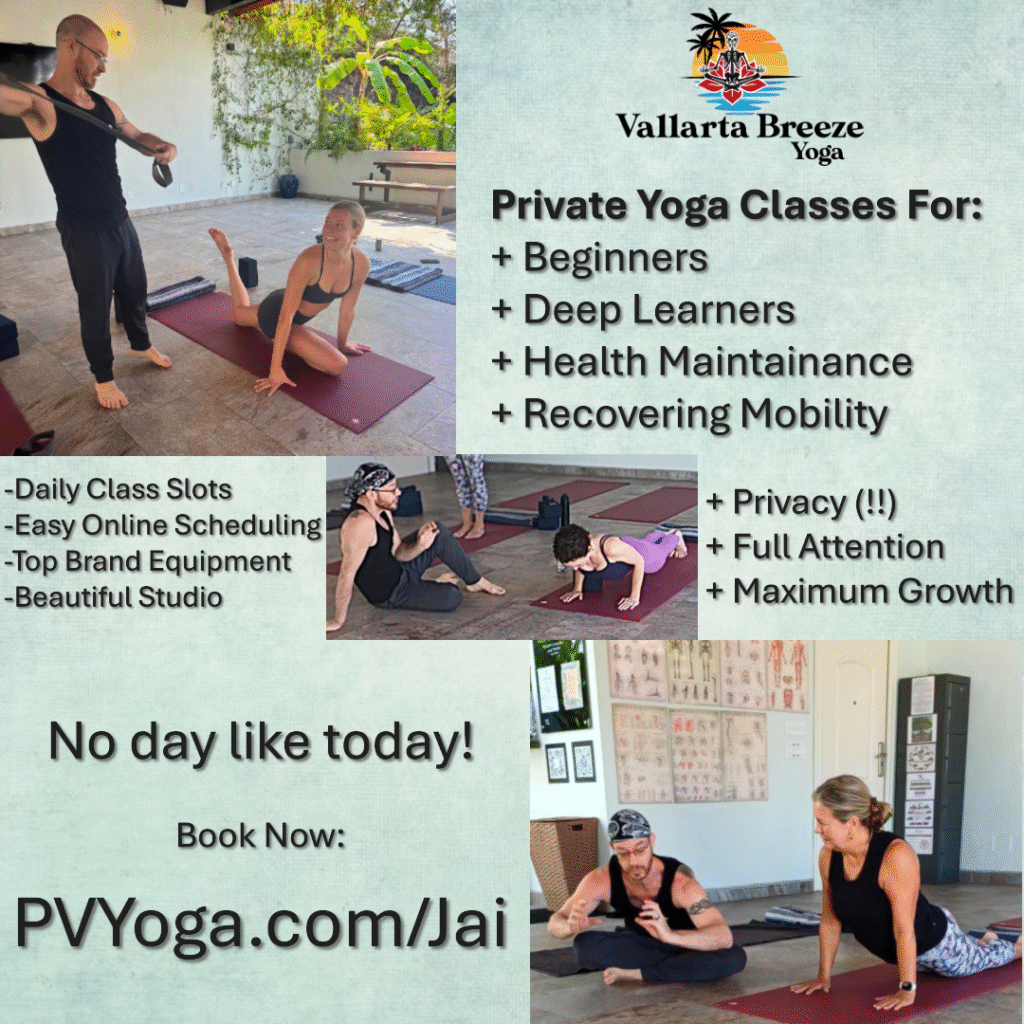
Continue your growth with the Vallarta Breeze Yoga Puerto Vallarta Yoga Studio!

Whether you’re looking to dive deeper into the physical practice of yoga, The Vedas, Upanishads, Yoga Sutras, or would like to explore our blog, we have a wealth of information available for you! Better yet, join us here in the Vallarta Breeze Yoga Puerto Vallarta Yoga studio, or practice with us online! we’re excited to continue this journey with you. See you on the mat!
Schedule